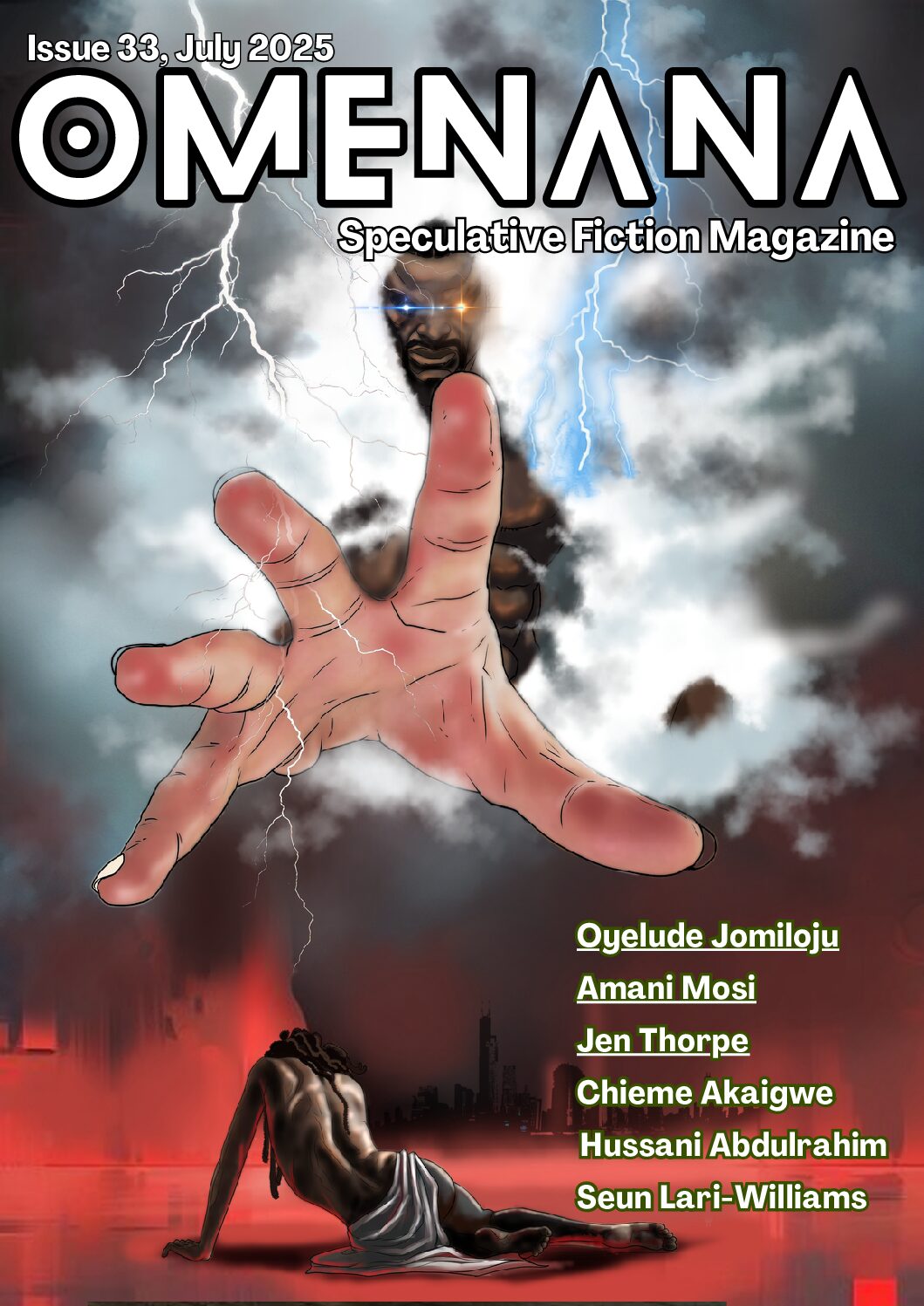
I wake up to the smell of diesel and saltwater.
It is still dark when I push my canoe into the creek, my hands finding their way along the slick wood like they have done for twenty-seven years. The tide breathes against the shore, slow and steady, pulling at the edges of the world. The air is heavy, close to the skin, and the mangroves are already whispering in the language they use when they think no one is listening.
The day is August 17th. Again.
I do not need a calendar to tell me. My bones know it. My dreams know it. The cormorant perched on the broken jetty knows it, too. It tilts its head and watches me like it knows we are both actors in a play whose ending cannot be changed.
The first time it happened, I thought it was madness. A trick of fatigue. Fishermen are used to repetition: the same nets, the same songs, the same stretch of brown-green water. But that day, the day before the oil came, kept folding itself over me like a wet cloth. I would live it, sleep, and wake up before dawn to find it had returned.
The others forgot. Each dawn washed them empty, but the tide kept me instead. I remember the night it began. I was alone on the water when I felt the change, the creek heavy and still. Then the current shifted, slow at first, then wrong. The others were on land, under roofs that could not hear the sea’s cry. But I was out there, close enough to feel the tremor beneath the surface. After that, whenever the world folds back, I stay awake inside it.
The sun always rises slow and swollen, like it resents the work ahead. By midmorning, the gulls will circle near the mouth of the creek. By evening, I will smell the sour, metallic breath of disaster drifting from the offshore rig. By night, the sea will turn black. And in the morning, August 17th will begin again.
I have tried many things. Once, I paddled in the opposite direction, away from the nets, away from the others, straight into the labyrinth of mangroves until my canoe scraped roots like knuckles. I stayed there until the tide turned, but when I slept in that green darkness, the morning still spat me back to the beginning.
I tried telling my wife. The first time, she laughed and told me to stop drinking before bed. The second time, she frowned. By the fifth time August 17 dawned again, she would not look at me. And on the seventh reset, she was gone; no longer present in the loop. The house and my heart remembered her voice, but the day did not. She was not gone by death or travel, not taken by tide or time, just quietly absent, the way a detail vanishes when a story is told again. I began to suspect then that whatever holds this day in place only needs me to remain aware; the rest, including her absence, adjusts around me.
*
Now it is only me, the water, and the endless day.
Today, I decide to fish the same as always. The loop has taught me there is no escaping the tide’s will. But as I paddle toward the horizon, I notice something new: a glint in the water, far from where the oil rigs crouch. It is small, precise, too bright to be a wave. I steer toward it, heart knocking against my chest like a fist on a locked door.
It is a sphere, no larger than a mango, floating just beneath the surface. When I reach for it, the air around me hums, and the water stills. My reflection bends and shivers, and for the first time in this endless loop, I feel the day hesitate.
I pull the sphere from the water, and it is colder than anything I have touched in this heat. Smooth, without a seam, yet it vibrates faintly, like the inside is full of trapped wings. When I lift it to my ear, I hear a sound that is not a sound, more like a pressure in my skull, a shape pressing against the edges of thought.
The first sounds I hear are not in any words I understand. Still, they settle in my mind as if they have been waiting there all along: Temporal Containment Unit. Oporoza Node 12.
I blink, looking around at the endless brown water, the sky flattened under the sun. Node? Containment? These are not creek words. These are not words for fishermen.
For a moment, I think about throwing it back. But my hands do not listen. I cradle it on my lap and paddle toward the open sea, feeling the thing grow warmer, as though it approves.
Halfway to the horizon, the light changes. Not the slow gold of evening, but a sharp, surgical shift. Shadows bend in the wrong direction. The air smells of metal instead of salt. And ahead, where the rig should be squatting on the water like a giant steel spider, there is only emptiness.
I stop paddling. My breath sounds too loud. The sphere pulses. And then I see them.
Boats. Many of them, sleek and silent, floating in a loose ring. They are not made of wood, and they do not move with the tide. Their surfaces ripple like water though they are solid. Figures stand inside them, human, but not. Their faces are obscured by plates of mirrored glass.
One of them steps forward, onto nothing, as if the air is holding them up. Their voice is inside my head, not in my ears.
“You were not meant to interact with the containment field,” they say. “The loop preserves environmental stability until extraction protocols can be met. You have disrupted alignment.”
I want to ask what any of that means. Instead, I hear myself say, “Why August seventeen?” My voice sounds thin, unworthy in the thick air.
The figure tilts its head, the way the cormorant does. “Because this is the last viable point before irreversible contamination. We anchor the sequence here to study the event without losing the subject.”
I do not like the way it says “the subject.”
I glance at the water, where my reflection should be. But the water holds no image now, only a faint shimmer, as though my place in the world is loosening.
“You could stop the spill,” I tell it. My voice grows harder. “You could warn the people. Why do you not?”
The figure’s answer is slow, deliberate, as if it wants me to feel every word. “We are not here to change the outcome. We are here to learn from it.”
The sphere in my lap grows so hot I have to drop it. It does not sink. It hovers on the surface, spinning. The world around me begins to fold, the sea curling upward like paper in a flame, the sky turning the deep copper of an old coin.
The figure steps back, and the others turn away. I know the loop is about to begin again. I know they will not help. But something inside me, something stubborn as the tide, tells me that knowledge is a weapon, even in a trap.

When the world snaps back to darkness, I am standing by my canoe on the shore. The tide is breathing against the sand. The mangroves are whispering. And the day is August 17th.
Again.
I stop fishing.
That morning, or the thousand mornings before it, I cannot tell anymore, I do not push my canoe far into the creek. I stand on the shore, watching the water breathe in and out, thinking of the figure’s words. If they will not change the outcome, then maybe I can.
The first thing I try is warning the others. I walk through the village before the sun climbs over the mangroves, stopping at every house, telling them the spill is coming. Some laugh, others wave me away. A few grow uneasy, but no one packs a bag. By evening, they are on the shore, hauling in nets or mending them, the way they always do. And by nightfall, the sour metallic wind creeps in from the sea.
When the loop restarts, I go further. I smash the engines of the small boats that take the workers out to the rig. I hide their tools. I cut ropes, sink drums of fuel. But the work crews still go, paddling long hours in borrowed canoes, stubborn as the tide. The rig still breathes its poison. The sea still turns black.
Another loop, and another, and another. I try setting fire to the rig before it can bleed into the water. But the flames die too quickly, smothered by the wind. The next day, August 17th again, I am back on the shore, hands unburned, smelling only diesel and salt.
I stop speaking to anyone. There is nothing to say.
And yet, I keep changing things, small things. Each time I do, the day resists a little less. I teach my neighbour’s son how to set a net deeper, away from the oily sheen that will come. I take a longer route through the mangroves so I can leave palm fronds over the paths, a marker only I understand. I carve messages into the wood of my canoe, hoping they will be waiting for me in some loop where the spill does not happen.
*
One morning, I find a woman standing at the shore where my canoe is tied. She is not from the village. Her clothes shimmer like fish scales, and her eyes are too sharp to belong to this place. She holds the sphere I once pulled from the water.
“You are changing the data,” she says.
I tell her I do not care about their data. I tell her I want my wife back, my people safe, my river clean. I tell her I want to live a day that is not August 17th.
She looks at me for a long time, the kind of look that feels like someone measuring the weight of your bones. “You have already succeeded,” she says. “In one branch, far from here, Oporoza never drowned in oil. But that branch is not yours.”
I step toward her, heart racing. “Then, send me there.”
She shakes her head. “You are anchored to this node. To move you would collapse the study. But know this, the changes you make will remain here, inside the loop, even if you never see their end.”
She sets the sphere on the sand and walks into the water without a ripple.
I pick it up. For the first time, it does not hum or burn. It is just a cold, smooth stone.
That night, the oil comes. The fish float belly-up. The water stinks of death.
And in the morning, August 17th begins again.
But this time, the neighbour’s boy is already walking toward the deeper nets I taught him to set. And for the first time in the loop, the cormorant leaves its perch and follows my canoe out into the open water.
I do not know if it matters. But it is enough to keep paddling.
The air feels different before dawn, though I know the day is the same. The tide still breathes against the shore, slow and steady. The mangroves still whisper secrets into the wind. But there is something softer in the water’s voice, as if it is listening to me now.
I push the canoe into the creek. The paddle’s rhythm is the same as it has always been, but I no longer rush. Every sound feels heavier, the drip of water from the blade, the hiss of a fish breaking the surface, the rustle of wings as the cormorant glides low over the bow.
At the first bend, the neighbour’s boy is there, crouched over his deeper net. He grins at me when he sees the catch glinting in the dawn. I want to tell him to hold on to this moment, to remember that there is a world beyond oil and smoke. But I only nod, and he nods back.
Past the bend, I notice more small changes. A woman has begun planting new mangroves where the bank is thin. Two boys are building a raft from oil drums, not for work on the rig, but for fishing farther out. The old man who used to drink palm wine at this hour is mending a canoe instead.
It is all still August 17th. The rig is still out there, waiting to bleed into the sea by nightfall. The loop is still tight around us. But inside its grip, the people are moving in ways they never did before.
I paddle farther, toward the open water. The sun is rising, a swollen gold, and the heat is already folding itself around me. I see the shimmer of the sphere in my mind, though it is gone now. I hear the woman’s voice: The changes you make will remain here, inside the loop.
I do not know if there is a version of me somewhere else who has escaped this day, who has lived to see a clean horizon. But I know this version will keep paddling.
By afternoon, the gulls circle over the mouth of the creek. By evening, the sour metallic breath of disaster drifts from the sea.
I do not look toward the rig. I keep my eyes on the water, on the cormorant flying just ahead of me, its wings slicing the air.
When the black tide comes, I will face it as I always do. But for now, in this narrow stretch of the river, the water is still clear, and the fish are still biting.
I let the paddle rest in my hands. The current carries me forward, and I breathe in the salt, the sun, the slow promise of a moment that cannot last, but is mine all the same.